

What holds this entire localization industry together?
Join the conversation on LinkedIn https://www.linkedin.com/posts/what-stops-the-whole-world-from-just-throwing-ugcPost-7515721648843444224-ocwO/
What stops the whole world from just throwing content into AI and hitting Publish? What holds this entire localization industry together?
The answer: Localization Managers.
The title and position change a bit from company to company, but they are the ones putting humans in the loop and fighting every day to show how important it is to use, for example, a translation memory, an updated glossary, and an expert reviewer.
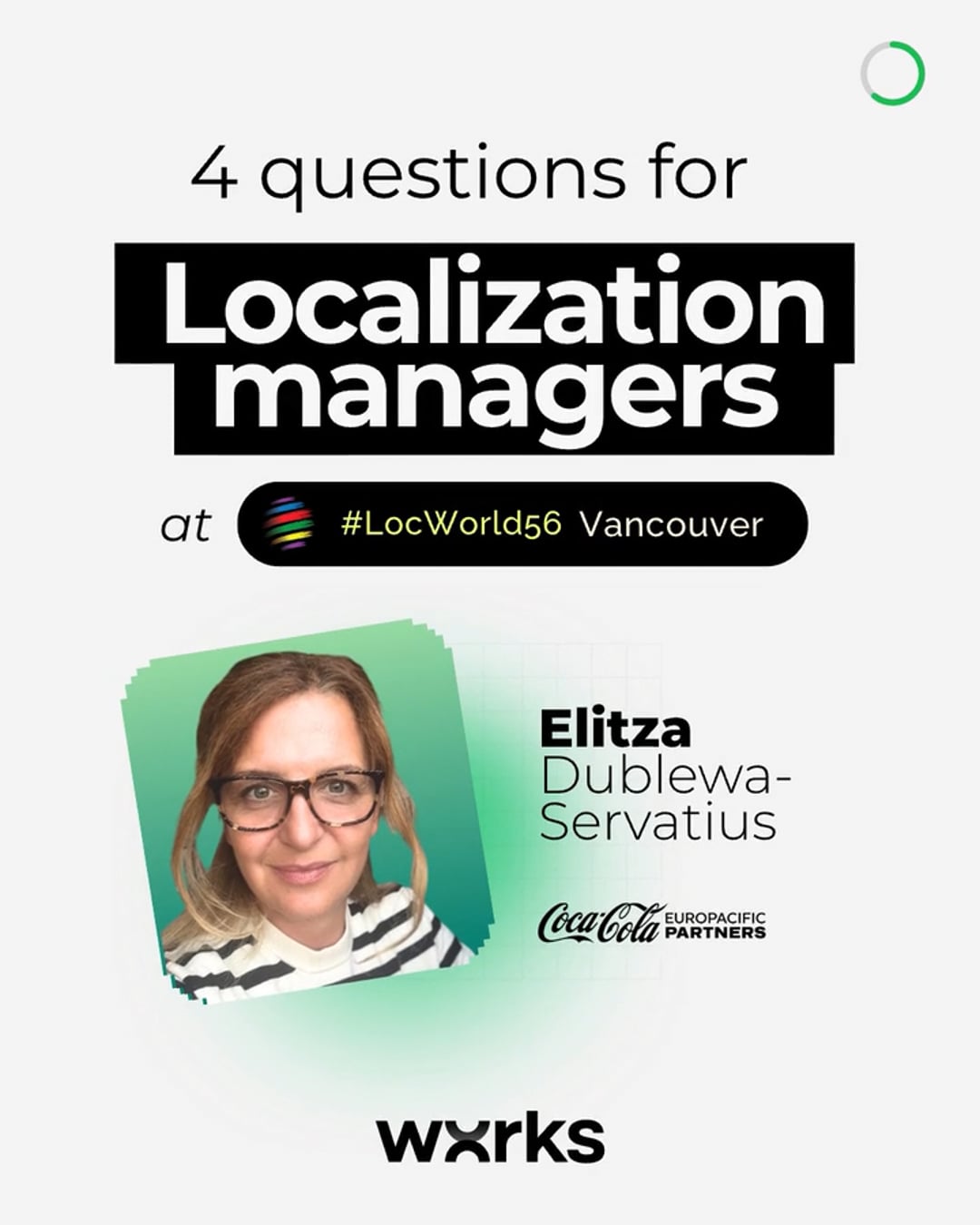
But proving why we MUST NOT abandon localization best practices, but instead let them coexist with what we have today, demands strategy. And hearing from Elitza Dublewa-Servatius, who has walked this path in a corporation as big as Coca-Cola Europacific Partners, could save you months of figuring it out on your own.
Join us at LocWorld Vancouver and let's talk about how we can keep putting humans at the center of localization, together.
4 comments
I believe localization managers play a crucial role in balancing AI technology with human expertise. AI can speed up translation workflows, but cultural context, terminology consistency, and human review are still essential for quality results. I also think translation memory and updated glossaries help maintain accuracy across projects. The future of localization is not just about using AI, but using it responsibly with skilled professionals in the loop.
Thank you for sharing that. We believe that too. People who know how to connect AI, context, terminology, and human judgment will still be in high demand. How do you think the localization manager role will change with AI?
I think AI will make the localization manager role more strategic and less focused on manual tasks. AI can handle initial translations and repetitive work, while localization managers will focus more on quality control, cultural accuracy, terminology, and overall localization strategy. Human expertise will still be important to ensure translations sound natural and connect with the target audience.
Curious where people land on this one. Comment on LinkedIn or here.